

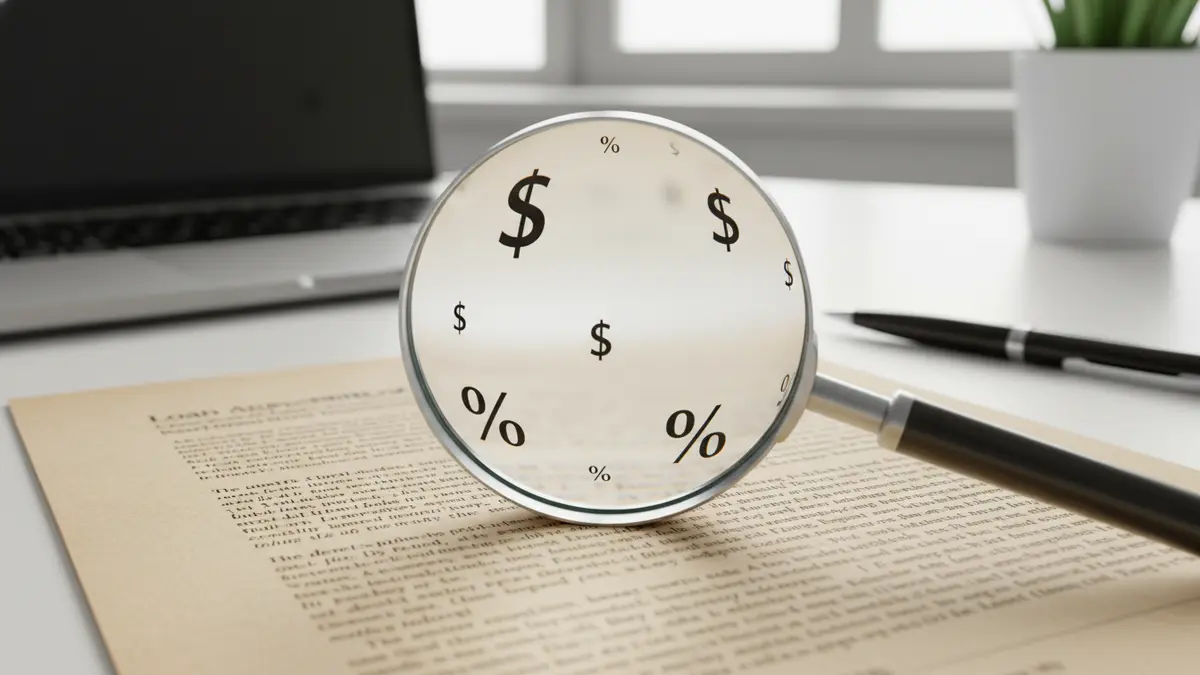
Find Loans That Match Your Profile
Compare vetted lenders side-by-side. Review APR, terms, and eligibility before deciding.
Compare LendersYou found it: a fast personal loan with a surprisingly low interest rate. It seems like the perfect solution to your urgent cash need. You quickly apply, get approved, and then the final documents arrive. Suddenly, the total amount you owe is significantly higher than you calculated. The culprit? A minefield of hidden fees buried in the fine print.
This frustrating scenario is all too common, turning a financial solution into a costly trap. But by learning to identify these deceptive charges, you can navigate the lending landscape with confidence and secure a fast personal loan that is truly transparent.
Related Stories




Understanding Hidden Fees: Unmasking the True Cost of Your Loan
What Exactly Are Hidden Fees?
Hidden fees are charges that lenders add to a loan that aren’t part of the advertised interest rate. While some fees are standard, predatory lenders often obscure them in complex legal jargon or fail to disclose them upfront, leading to sticker shock for unprepared borrowers.
These costs can include anything from processing the application to paying the loan off early. Their primary purpose is to increase the lender’s profit. The danger is that a fast personal loan with a low headline interest rate can end up being far more expensive than a loan with a slightly higher rate but no hidden fees. Understanding these potential costs is the first step toward protecting your finances.
Common Types of Deceptive Loan Charges
Fees to Watch Out For
Knowledge is your best defense. When you review a loan offer, you need to be a detective, scanning for specific terms that could cost you money. These fees can go by many names, but they generally fall into a few key categories. Be on high alert for the following common culprits.
- Origination Fees: This is a one-time fee charged by the lender to process your loan application. It’s typically deducted directly from your loan proceeds, meaning you receive less cash than you borrowed. For example, on a $10,000 loan with a 5% origination fee, you would only receive $9,500.
- Prepayment Penalties: Believe it not, some lenders penalize you for paying off your loan ahead of schedule. They lose out on future interest payments, so they charge a fee to recoup some of that expected profit. This can be a major drawback if you plan to pay off your debt as soon as you’re able.
- Late Payment Fees: While it’s reasonable to expect a fee for paying late, these can sometimes be excessive. Look for details on grace periods, the fee amount (whether it’s a flat rate or a percentage), and if multiple late fees can be stacked.
- Application or Processing Fees: Some lenders charge a non-refundable fee just to consider your application. Reputable lenders typically do not charge this, as they make their money on the interest and origination fees of approved loans. This is often a red flag.
- Insufficient Funds (NSF) Fees: If you set up automatic payments and don’t have enough money in your account to cover it, the lender will charge you an NSF fee, similar to a bounced check fee from a bank.
- Optional Credit Insurance: Lenders may offer credit life or disability insurance that pays off your loan if you can’t. While it sounds helpful, it’s often overpriced and added to your loan balance, increasing your monthly payment and total interest paid. This should always be an optional, separate decision, not a requirement for the loan.
Navigating Loan Offers: Tools for Transparency
The Power of the APR
So, how do you compare loans when they all have different fees and rates? The answer is the Annual Percentage Rate (APR). The APR is the most important number to focus on because it represents the true annual cost of borrowing. By law, the APR must include the interest rate *plus* most of the mandatory fees, like the origination fee, expressed as a single annual percentage. This creates an apples-to-apples comparison.
A loan with a 10% interest rate and a 5% origination fee might have a higher APR than a loan with a 12% interest rate and no fees. To fully decode interest rates and find the best deal on a fast personal loan, always use the APR as your guide, not the advertised interest rate alone.
Your Pre-Application Checklist
Securing a fast personal loan without falling into fee traps requires diligence. Before you sign any agreement, follow this checklist to ensure you’re making a smart financial decision. This proactive approach can save you hundreds or even thousands of dollars over the life of the loan. (see also: Secret Guide: Bypass Banks Real High-Yield Savings Now)
- Read the Loan Agreement—Every Word: The fine print is where fees are legally disclosed. Pay close attention to sections titled “Fees,” “Loan Costs,” or “Prepayment.” If you don’t understand something, do not sign.
- Ask Direct Questions: Get on the phone or chat with a loan officer and ask pointed questions. “Are there any origination fees?” “Is there a penalty for early repayment?” “What are all the fees associated with this loan?” Get the answers in writing if possible.
- Compare Multiple Lenders: Never accept the first offer you receive. The best way to know if you’re getting a good deal is to compare fast loans from at least three different lenders, including banks, credit unions, and reputable online lenders. Compare their APRs and fee structures side-by-side to find the best fast personal loan for your needs.
- Check Lender Reviews: See what other borrowers have said. Search for the lender’s name plus terms like “complaints” or “hidden fees.” This can reveal a pattern of non-transparent practices that you’ll want to avoid.
- Understand Your Rights: In the United States, the Truth in Lending Act (TILA) requires lenders to provide you with a clear disclosure of the key terms of the loan, including the APR and total finance charges, before you are legally obligated. This document is your best friend in spotting all associated costs.
Leveraging Regulatory Safeguards to Unmask Hidden Fees
While vigilance is key, borrowers aren’t entirely on their own in the fight against deceptive loan practices. A robust regulatory framework exists to protect consumers and ensure transparency in lending. Understanding these safeguards empowers you to not only identify but also challenge unfair charges, helping you truly unmask hidden fees that unscrupulous lenders might try to impose. (For more details, see Consumer Financial Protection Bureau.)
The Role of the CFPB and FTC
In the United States, two primary federal agencies stand as bulwarks against predatory lending: the Consumer Financial Protection Bureau (CFPB) and the Federal Trade Commission (FTC). The CFPB is dedicated to making sure consumers are treated fairly by banks, lenders, and other financial companies. They oversee the financial marketplace, enforce federal consumer financial laws, and actively work to prevent illegal junk fees.
For instance, the CFPB has taken action against lenders for misleading advertising and charging fees not disclosed to consumers, returning millions to affected borrowers. The FTC, on the other hand, focuses on preventing deceptive and unfair business practices across various industries, including lending.
Both agencies offer resources for consumers to file complaints and provide guidance on understanding financial products, serving as vital allies in your quest to unmask hidden fees.
Deeper Dive into TILA
The Truth in Lending Act (TILA) is a cornerstone of consumer protection in lending. Beyond simply requiring the disclosure of the Annual Percentage Rate (APR), TILA mandates that lenders provide clear, upfront information about the total cost of credit. This includes not just the interest rate, but also finance charges, which encompass many of the fees we’ve discussed, such as origination fees.
The law ensures that consumers receive a “Truth in Lending Disclosure” statement before finalizing a loan. This statement details the loan amount, interest rate, total finance charge, payment schedule, and total amount to be repaid.
This comprehensive disclosure is your legal right and your most powerful tool to unmask hidden fees by seeing all costs laid out explicitly.
State-Specific Protections and How to Use Them
Federal laws set a baseline, but many states also have their own robust consumer protection statutes that can offer additional safeguards. These state laws might cap interest rates, restrict certain types of fees (like excessive prepayment penalties), or require even more detailed disclosures.
For example, some states have usury laws that limit the maximum interest rate a lender can charge. Familiarizing yourself with your state’s specific lending regulations can provide an extra layer of defense.
If you suspect a lender is violating federal or state laws, reporting them to the CFPB, FTC, or your state’s attorney general’s office can not only help you but also protect other consumers from similar deceptive practices, effectively bringing hidden fees to light.
Beyond the APR: Understanding Loan Terms and Total Cost
While the APR is an indispensable tool for comparing loan offers and helping to unmask hidden fees, it’s crucial to remember that the total cost of your personal loan is influenced by several other interconnected factors. Overlooking these can lead to a seemingly good deal turning into a long-term financial burden. A holistic understanding of your loan’s structure ensures you’re making the most informed decision. (For more details, see Federal Reserve.)
The Impact of Loan Term
The length of your loan, or its term, plays a significant role in the total amount you will repay. A longer loan term typically results in lower monthly payments, which can seem attractive when you’re seeking a fast personal loan.
However, extending the repayment period almost
Sources
- Federal Reserve — authoritative reference
- IRS — authoritative reference
- Consumer Financial Protection Bureau — authoritative reference
- Federal Trade Commission — authoritative reference
- Investopedia — authoritative reference
Frequently Asked Questions About Hidden Loan Fees
What exactly are “hidden fees” in fast personal loans?
Hidden fees are charges that lenders add to a loan that are not part of the advertised interest rate. They can be obscured in complex legal jargon or not disclosed upfront, leading to a higher total cost than initially expected. Their primary purpose is to increase the lender’s profit beyond the stated interest rate.
How can the Annual Percentage Rate (APR) help me identify hidden fees?
The APR is a crucial tool because it represents the true annual cost of borrowing. By law, the APR must include the interest rate plus most mandatory fees, such as origination fees, expressed as a single annual percentage. This allows you to compare different loan offers on an “apples-to-apples” basis, revealing the actual cost beyond just the advertised interest rate.
What are some common types of deceptive fees I should watch out for?
You should be vigilant for several common fees, including origination fees (a one-time charge to process the loan), prepayment penalties (fees for paying off your loan early), excessive late payment fees, non-refundable application or processing fees, insufficient funds (NSF) fees, and optional, often overpriced, credit insurance.
Which regulatory bodies protect consumers from hidden fees and deceptive lending practices?
In the United States, the Consumer Financial Protection Bureau (CFPB) and the Federal Trade Commission (FTC) are key federal agencies that safeguard consumers. The CFPB ensures fair treatment by financial companies and works to prevent illegal junk fees, while the FTC focuses on preventing deceptive business practices. Additionally, the Truth in Lending Act (TILA) mandates clear disclosure of all loan costs, including the APR and total finance charges.
Can I completely avoid all fees when taking out a fast personal loan?
While some standard fees, like origination fees, are common and often factored into the APR, you can significantly reduce or avoid many deceptive or excessive charges. This requires diligence: thoroughly reading the loan agreement, asking direct questions about all potential fees, comparing offers from multiple reputable lenders, checking lender reviews, and understanding your consumer rights under laws like TILA.