

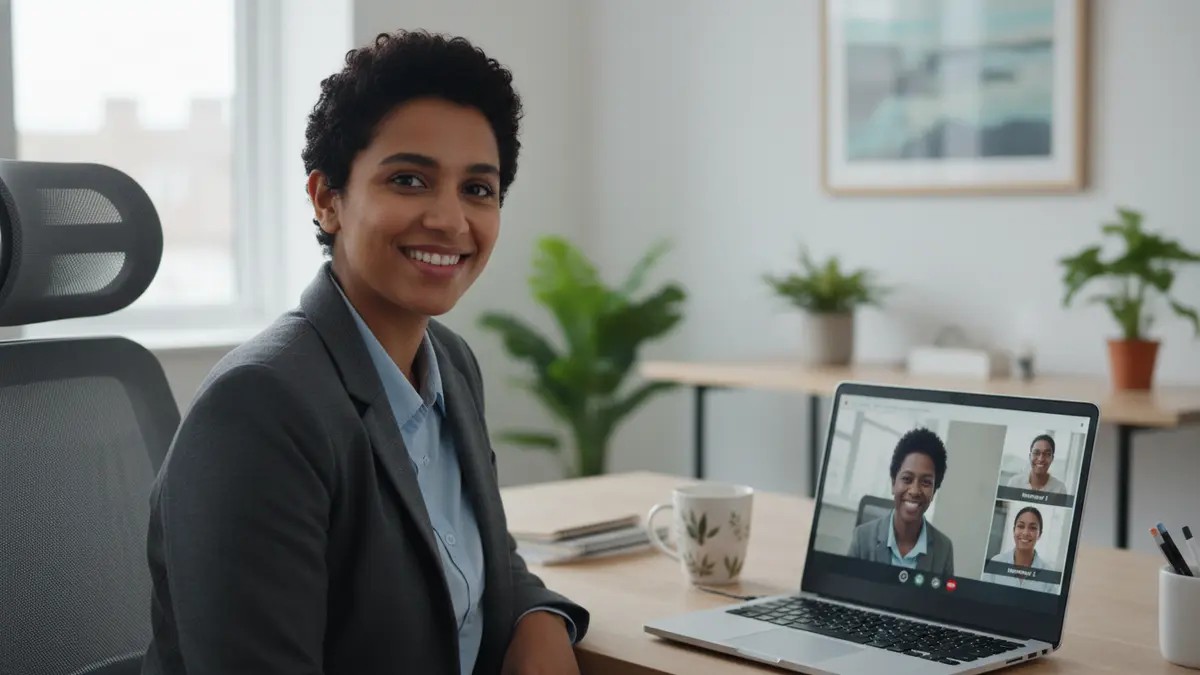
You’ve done it. Your resume and optimized LinkedIn profile caught the eye of a recruiter at a top company, and you’ve landed an interview for your dream remote role. The excitement is real, but it’s quickly followed by a specific kind of anxiety. This isn’t a handshake-and-a-boardroom meeting; it’s a high-stakes conversation happening through a screen.
In the 2026 job market, mastering the virtual interview is no longer an optional skill—it’s the primary gateway to securing high-paying, flexible careers in leading markets like the US, UK, Canada, and Australia. This guide provides the actionable strategies you need to conquer the digital stage and turn that video call into a job offer. To truly Master Virtual Interviews, a comprehensive approach is essential.
Related Stories



The Pre-Interview Gauntlet: Tech, Setup, and Research
Before you even think about what you’ll say, you need to ensure your setup is flawless. A poor connection or distracting background can signal a lack of preparation or professionalism to a potential employer. Think of this as setting the stage for your performance; a solid foundation lets your talent shine through.
- Conduct a Full Tech Audit: Don’t wait until five minutes before the call. A day or two in advance, test your hardware and software. Is your webcam clear? Is your microphone crisp and free of static? Test it with a friend or use your video conferencing app’s built-in testing feature. Ensure your internet connection is stable. If possible, use a wired Ethernet connection for maximum reliability.
- Curate Your Environment: Your background speaks volumes. Choose a neutral, uncluttered space. A clean wall, a bookshelf, or a plant are excellent choices. Avoid virtual backgrounds unless you’ve tested them extensively, as they can be glitchy. Lighting is crucial; position a light source in front of you, not behind, to avoid being silhouetted. Natural light from a window is ideal.
- Eliminate All Distractions: Inform your family or roommates about your interview schedule. Put your phone on silent and in another room. Close all unnecessary tabs and turn off notifications on your computer. The only thing on your screen should be the interview window and perhaps a discreet document with your notes.
- Deep-Dive Research: Go beyond the company’s ‘About Us’ page. Understand their products, recent news, and company culture, particularly their approach to remote work. Research your interviewers on LinkedIn. Understanding their roles and background allows you to tailor your answers and build rapport. This level of preparation shows genuine interest and sets you apart from other candidates, helping you to Master Virtual Interviews effectively.
Crafting Your Narrative for the Digital Stage
Communicating effectively through a screen requires a different set of skills than in-person interaction. Nuances can be lost, so you must be more deliberate with your verbal and non-verbal cues to project confidence and engagement.
- Master Digital Body Language: Eye contact is critical. Instead of looking at the interviewer’s face on your screen, train yourself to look directly into the camera lens when you speak. This creates the illusion of direct eye contact for them. Sit up straight, lean in slightly to show engagement, and use natural hand gestures.
- Project Energy with Your Voice: Your voice is a powerful tool in a virtual setting. Speak clearly, at a measured pace, and modulate your tone to convey enthusiasm. A monotone voice can be interpreted as disinterest. Record yourself answering a practice question to see how you sound.
- Structure Your Answers with the STAR Method: For behavioral questions (“Tell me about a time when…”), the STAR method is your best friend. It provides a clear, concise, and compelling structure for your stories.
- Situation: Briefly set the scene and provide context.
- Task: Describe your responsibility or the goal you were working towards.
- Action: Explain the specific steps you took to address the situation. This is where you highlight your skills.
- Result: Share the outcome of your actions, quantifying your success with data or metrics whenever possible.
Na real, answering Common (and Tricky) Remote Work Questions
Employers hiring for remote roles need to know you have the discipline, communication skills, and self-motivation to thrive without direct, in-person supervision. Be prepared for questions that specifically probe these abilities. Your goal is to reassure them that you are a reliable, productive, and collaborative remote employee. For a broader look at the opportunities available, explore this guide to high-paying remote jobs. (see also: Ultimate Guide: How to Transition to Online Jobs Successfully)
- “How do you stay motivated and manage your time without direct supervision?” Discuss your system. Mention time-blocking, to-do lists, project management tools (like Asana or Trello), and how you set daily and weekly goals. Emphasize your proactive approach to your workload.
- “Describe your dedicated home office setup.” They want to know you have a professional, quiet space conducive to focused work. Describe your desk, ergonomic chair, and reliable internet, assuring them you can work productively and without interruption.
- “How do you prefer to communicate and collaborate with a distributed team?” Showcase your flexibility. Talk about your experience with asynchronous (email, Slack) and synchronous (video calls) communication. Mention the importance of clear documentation and being responsive within established team hours.
Sério, demonstrating Your Value: From Skills to Culture Fit
Sério, a successful interview isn’t just about having the right answers; it’s about proving you are the best solution to the company’s problem. This means showcasing your skills in action and demonstrating that you will be a positive addition to their remote team culture.
- Show, Don’t Just Tell: When possible, have examples of your work ready. If you’re a designer, have your portfolio link handy. If you’re a developer, be ready to share a relevant GitHub repository. For marketers, have a campaign summary with key metrics. Being able to visually present your accomplishments is incredibly powerful.
- Ask Insightful Questions: The questions you ask are just as important as the ones you answer. Move beyond salary and benefits. Ask about the team’s biggest challenges, how success is measured for your role, the remote onboarding process, and the company’s long-term vision for remote work. This shows you’re thinking strategically about your contribution.
- Highlight Continuous Learning: Top companies want employees who are proactive about their growth. Mentioning recent certifications or courses shows initiative and a commitment to staying current in your field. This dedication is a powerful indicator of a self-motivated employee, which is essential for remote success. Investing in yourself through high-ROI online courses for Tier A markets can be a significant talking point.
Beyond the Chat: Excelling in Virtual Technical Assessments and Case Studies
For many high-paying remote roles, especially in tech, data science, and even some finance positions, the virtual interview process extends beyond conversational Q&A to include rigorous technical assessments or detailed case studies. These are designed to evaluate your practical skills, problem-solving abilities, and how you approach complex challenges under pressure. To truly Master Virtual Interviews, you must prepare for these specialized hurdles with the same diligence as you would for behavioral questions.
Navigating Technical Assessments Virtually
Technical assessments often involve live coding sessions or take-home assignments. For live coding, ensure your development environment is set up and tested. Practice articulating your thought process aloud as you code; interviewers aren’t just looking for a correct solution, but also for your approach to problem-solving.
For instance, if you’re a software engineer, you might be asked to optimize an algorithm on a shared screen. Explaining your initial brute-force idea, discussing its inefficiencies, and then iteratively improving it demonstrates a strong engineering mindset. Have a stable internet connection and a quiet space where you won’t be interrupted, as these assessments demand intense focus. (see also: Ultimate Guide: Master Remote Time Management Hacks)
Conquering Virtual Case Studies
Case studies, common in consulting, product management, and strategy roles, require you to analyze a business problem and propose a solution. These can range from a short, on-the-spot analysis to a multi-day project culminating in a virtual presentation. When presenting a case study, clarity and conciseness are paramount. Use visual aids effectively – slides should be clean and professional.
Practice your presentation delivery, paying attention to pacing and engaging your virtual audience. Be ready to defend your assumptions and respond to challenging questions. For example, a finance role might present a hypothetical investment scenario where you need to analyze market data and recommend a portfolio strategy. Your ability to justify your choices with data and communicate complex financial concepts clearly will be key.
Leveraging AI and Advanced Tools to Master Virtual Interviews
The landscape of virtual interviewing is rapidly evolving, with artificial intelligence and advanced digital tools playing an increasingly significant role. In 2026, candidates who strategically leverage these resources for preparation and performance will gain a distinct advantage. To truly Master Virtual Interviews, it’s wise to embrace these technological aids, but always with an understanding of their limitations and the importance of maintaining authenticity.
AI-Powered Practice Platforms
Several platforms now offer AI-driven mock interview experiences. These tools can analyze your responses for common interview questions, providing feedback on aspects like your speaking pace, filler words (“um,” “uh”), eye contact (by tracking your gaze relative to the camera), and even the emotional tone of your voice.
For example, after practicing a STAR method answer, an AI tool might highlight that you spent too much time on the “Situation” and not enough on the “Action” and “Result.” While not a substitute for human feedback, these platforms offer invaluable, objective insights that can refine your delivery and content, ensuring you are polished and articulate when it counts.
Enhancing Your Virtual Presence with Smart Tools
Beyond practice, technology can elevate your actual interview performance. Noise-canceling headphones with a high-quality microphone can drastically improve audio clarity, even in less-than-ideal home environments. Advanced webcam software can offer features like automatic framing, subtle background blurring (more reliable than virtual backgrounds), and even light correction.
Some tools can also help manage notes discreetly, allowing you to reference key points without breaking eye contact. The goal here isn’t to be artificial, but to use technology to eliminate distractions and technical glitches that might otherwise detract from your professional image and allow your genuine skills and personality to shine through. Integrating these smart tools into your pre-interview gauntlet is another step to Master Virtual Interviews.
The Post-Interview Follow-Up: Sealing the Deal Remotely
Your work isn’t over when you click “Leave Meeting.” A strategic and professional follow-up can reinforce your positive impression and keep you top-of-mind as the hiring team makes its decision.
- The Personalized Thank-You Email: Send a thank-you note via email to each person you spoke with within 24 hours. Don’t use a generic template. Reference a specific, interesting point from your conversation with each person. This shows you were actively listening. Briefly reiterate your enthusiasm for the role and why you believe you’re a great fit.
- Connect on LinkedIn: Send a simple, personalized connection request on LinkedIn to your interviewers. Your message can be as simple as, “Hi [Name], it was a pleasure speaking with you today about the [Role Name] position. I enjoyed our conversation.”
- Be Patient and Professional: Respect the timeline the recruiter provided. It’s acceptable to send a polite check-in email if you haven’t heard back by the specified date, but avoid being pushy. Professional patience is a virtue.
Further Reading
For deeper context and authoritative perspectives, consult these sources:
Na real, frequently Asked Questions (FAQ)
Q1: What should I wear for a virtual interview?
A: Dress as you would for an in-person interview for that specific company and role. This usually means business casual at a minimum. Wear a solid, professional color that contrasts with your background. And yes, you should wear professional pants or a skirt—you never know if you’ll need to stand up unexpectedly! (see also: Unlock Your Digital Goldmine: Best Online Digital Marketing Jobs for 2026)
Q2: How do I recover from a technical issue during the interview?
A: Stay calm. Technical glitches happen. If your video freezes or audio cuts out, calmly acknowledge it. Say something like, “It seems my connection is unstable for a moment. Could you please repeat the question?” Have a backup plan, such as the interviewer’s phone number, so you can quickly dial in if your internet fails completely. Your calm and resourceful handling of the situation can actually be a positive signal to the employer.
Q3: Is it okay to have notes during a virtual interview?
A: Yes, it is acceptable, but they must be used discreetly. A few bullet points on a sticky note on the edge of your screen or a small notepad can help you remember key talking points or the questions you want to ask. Do not read from a script. Your delivery should feel natural and conversational, not rehearsed.
Conclusion: Your Virtual Handshake Awaits
In 2026, the virtual interview is the new handshake, the new boardroom, and the definitive gateway to the most sought-after remote careers. Success isn’t about having the fastest internet or the fanciest webcam; it’s about meticulous preparation, adapting your communication style for the digital medium, and strategically demonstrating your value.
By treating the virtual interview with the seriousness and professionalism it deserves, you move beyond being just another applicant on a screen. You become the clear, confident, and capable candidate they’ve been searching for. Now, go prepare your tech, practice your narrative, and Master Virtual Interviews to land that role.
Sources
- Forbes Career & Leadership — Expert advice on career development, remote work strategies, and interview preparation.
- CNBC Make It — Practical guidance for job seekers navigating the evolving employment landscape.
- The Guardian Careers — UK perspectives on job market trends, remote roles, and professional development.
- Virtual interview – Wikipedia — Comprehensive overview of virtual interview processes and best practices.
More Frequently Asked Questions (FAQ)
How can I make sure I’m making “eye contact” in a virtual interview?
To create the illusion of direct eye contact, train yourself to look directly into your webcam lens when you are speaking. While it’s natural to want to look at the interviewer’s face on your screen, shifting your gaze to the camera