

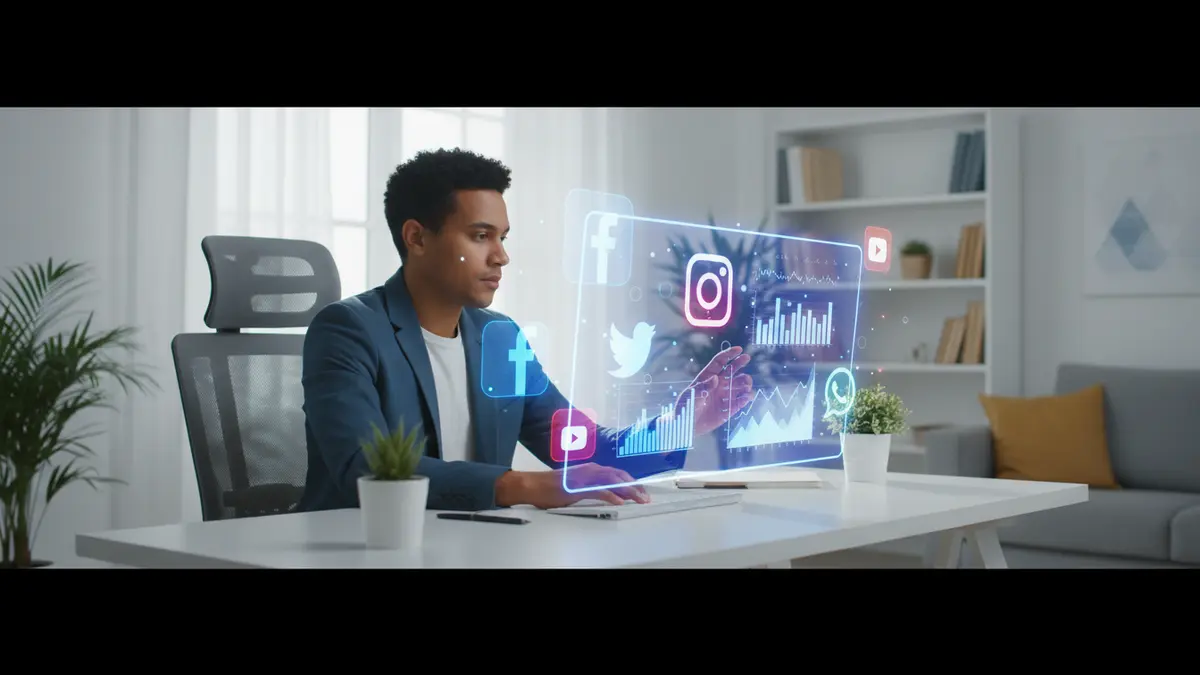
Becoming social savvy for lucrative online manager jobs in 2026 is more than a career choice; it’s a strategic move into a booming digital economy. As businesses increasingly rely on digital platforms to connect with customers, the demand for skilled professionals who can navigate the complexities of social media has skyrocketed.
This isn’t just about posting updates; it’s about building communities, driving revenue, and shaping brand identity. Keep reading to discover the essential skills, top-paying niches, and actionable steps to thrive in this dynamic field.
Related Stories



The Exploding Demand for Social Media Expertise in 2026
In 2026, the digital landscape is more integrated into our daily lives than ever before. Businesses of all sizes now recognize that a strong digital presence is not just beneficial—it’s essential for survival and growth. This realization has fueled an unprecedented demand for skilled platform managers.
The social media management market was valued at USD 32.48 billion in 2025 and is projected to reach USD 39.14 billion in 2026, with North America dominating the market share.
Companies are allocating significant portions of their marketing budgets to digital strategies, with a large chunk dedicated to platform outreach, advertising, and community management. Total spending on digital advertising is projected to reach $317.33 billion in 2026, with a significant portion (82.9%) generated through mobile by 2030.
Marketers are increasingly shifting budgets to these platforms, with 80% planning to reallocate funds from other channels and 87% expecting their paid digital spend to increase. While the optimal marketing budget typically ranges from 5-15% of gross revenue, depending on business stage and growth objectives, digital marketing often accounts for about 7.6% of organic marketing budgets.
For startups, content and SEO are often the primary channels, with paid amplification used to boost top-performing organic content.
This surge isn’t limited to large corporations. Small businesses, startups, non-profits, and personal brands all need expert guidance to cut through the noise. They require professionals who can do more than schedule posts; they need strategists who understand analytics, audience segmentation, and conversion funnels.
The U.S. Bureau of Labor Statistics projects a 6% growth rate for Advertising, Promotions, and Marketing Managers (a category that includes Digital Platform Managers) from 2022 to 2032, which is faster than the average for all occupations. Furthermore, the demand for digital strategists and digital content managers is expected to increase by 18% through 2032. (see also: Unlock Your Talent: Best Online Graphic Design Gigs in 2026)
This creates a wealth of opportunities for those with the right skills. The role has evolved from a simple communications function to a core component of business strategy, making it one of the most stable and rewarding online careers available today. The need for genuine connection and expert brand management ensures that these roles are here to stay.
The Evolving Role of a Social Media Manager in 2026
The title “Digital Platform Manager” often conjures images of someone simply posting on Facebook or Instagram. In reality, the role is far more complex and strategic. A modern social media manager is a digital Swiss Army knife, blending creativity with analytical precision.
They are strategic professionals responsible for planning, executing, and optimizing a brand’s presence across digital platforms to drive brand and business outcomes. Their core responsibility is to develop, implement, and manage a company’s digital strategy to increase brand awareness, improve marketing efforts, and drive sales.
This involves much more than content creation; it requires a deep understanding of each platform’s unique algorithm, audience demographics, and advertising ecosystem. These managers are now expected to analyze content and platform performance, understand audience and cultural insights, and make data-driven decisions.
Core Responsibilities and Daily Tasks
Daily tasks can range from creating comprehensive content calendars and writing compelling copy to analyzing performance metrics and adjusting campaigns in real-time. They are community builders, engaging with followers, responding to comments, and managing the brand’s online reputation. This includes monitoring, moderating, and responding to audience comments and messages, ensuring fast response times, on-brand communication, and professional handling of negative feedback.
Furthermore, many digital marketing managers are responsible for paid digital advertising campaigns, which involves budget management, A/B testing, and optimizing for return on investment (ROI). They are the voice of the brand online, requiring a delicate balance of marketing acumen, customer service skills, and creative flair. This multifaceted nature is what makes the job challenging yet incredibly rewarding.
The role now encompasses:
- Content strategy development
- Community management
- Content creation and copywriting
- Analytics and reporting
- Paid social media advertising campaign management
- Influencer partnership management
- Trend monitoring
- Brand voice consistency
- Crisis management
- Audience research and segmentation
Strategic Imperatives: Beyond Basic Management
A truly effective digital manager operates at a strategic level, moving beyond mere content scheduling. They are responsible for devising a digital strategy that defines SMART (Specific, Measurable, Achievable, Relevant, Time-bound) goals, auditing current performance, conducting competitive analysis, and defining target audience personas. This strategic approach ensures that every digital activity aligns with broader business objectives, such as lead generation, sales, or customer retention.
They must understand that these digital platforms in 2026 operate within an AI-driven distribution system, where platforms function as algorithmic ranking engines. Success is determined by retention, engagement signals, paid amplification, and performance metrics, not just chronological feeds.
Therefore, strategic thinking involves understanding how algorithms work, adapting content for multi-modal discovery (including visual, photo, and voice search), and optimizing for “platform SEO.” (see also: Best Free Digital Marketing Courses: Unlock Your Career Now)
Key Skills and Technologies for 2026 Success
Data Literacy, Analytics, and AI Integration
In 2026, digital platform managers are expected to be highly data-literate, capable of interpreting complex analytics to inform strategy. This involves understanding platform-specific analytics (e.g., Instagram Insights, TikTok Analytics, LinkedIn Analytics), calculating engagement rates, and familiarity with paid ad metrics like CPM (Cost Per Mille) and cost per click.
They must be able to distill analytics reports into actionable data points, identifying which content performs well, understanding audience interaction, and adjusting strategies accordingly. AI-powered analytics tools are becoming table stakes, assisting with performance tracking, sentiment analysis, and generating reports.
AI is revolutionizing content creation by assisting with generating platform-optimized captions, repurposing top-performing posts, and even suggesting posting schedules based on audience engagement patterns. Tools like Hootsuite’s OwlyWriter AI, Lately, and Jasper Social can generate dozens of digital posts from a single piece of long-form content, significantly increasing output without additional headcount.
About 94% of marketers plan to use AI in their content creation processes in 2026. However, while AI can accelerate content production, a human touch remains essential to ensure authenticity and maintain brand voice.
AI’s capabilities extend to advanced analytics, offering real-time sentiment analysis across mentions and messages, automated response suggestions for customer service, and reporting automation. Sprout Social’s AI Assist, for instance, can provide these deep customer intelligence insights.
AI scheduling tools, such as those offered by Buffer, Hootsuite, and Sprout Social, analyze historical engagement patterns to predict optimal posting times, leading to reported engagement rate improvements of 25-40%. These tools free up digital managers from repetitive tasks, allowing them to focus on high-value strategic work, such as refining strategy and communication.
Creative Direction, Content Mastery, and Adaptability
While some digital content managers still create content, many in 2026 lead content strategy and creative oversight. This includes developing engaging posts, videos, graphics, and stories across various platforms, often working with content creators.
The focus is shifting towards “real over perfect” content, with authenticity winning over overly polished productions. User-generated content (UGC) and employee advocacy are increasingly valued for building trust and authenticity.
Short-form video continues to dominate, with 31% of marketers citing it as delivering the best ROI, but long-form video is also making a purposeful comeback for deeper engagement. (see also: Ultimate Guide: Digital Marketing Courses for Career Change)
The digital landscape is in constant flux, with new platforms emerging, algorithms changing, and content formats evolving. A key skill for digital content managers is adaptability and the ability to monitor trends and cultural relevance.
This means being able to quickly try new features, adjust strategies based on real-time data, and understand the nuances of different generations’ content norms, such as Gen Alpha shaping new trends or Millennials and Gen Z focusing on work-life balance content.
Staying updated on emerging platforms like Bluesky, Discord, Geneva, WhatsApp Channels, and RedNote (Xiaohongshu) is also crucial for reaching niche communities and building high-trust content.
Navigating Career Paths and Specializations in Social Media
Career Progression and Leadership Opportunities
A typical career ladder in digital platforms often starts with roles like Digital Coordinator or Assistant, focusing on execution, content support, community engagement, and basic reporting.
From there, professionals can advance to Digital Platform Manager, taking ownership of daily channel management, executing strategies, and reporting on performance. Further progression leads to Senior Digital Platform Manager, where individuals lead digital strategy across all platforms.
Then to Head of Digital or Digital Lead, who set organic digital strategy at an organizational level. Ultimately, director-level positions like VP of Digital or VP of Content define the company’s overarching digital and content strategy.
Emerging Specializations and Niche Opportunities
Beyond general management, several specialized paths are gaining prominence. These include: Digital Strategy Director, focusing on high-level planning, audience segmentation, and funnel integration; Community and Culture Lead, responsible for fostering authentic
Sources
- Federal Reserve — authoritative reference
- IRS — authoritative reference
- Consumer Financial Protection Bureau — authoritative reference
- Federal Trade Commission — authoritative reference
- Investopedia — authoritative reference
Frequently Asked Questions About Social Media Manager Jobs in 2026
What is the demand for social media managers in 2026?
The demand for social media expertise is exploding in 2026. The social media management market was valued at USD 32.48 billion in 2025 and is projected to reach USD 39.14 billion in 2026. The U.S. Bureau of Labor Statistics projects a 6% growth rate for Advertising, Promotions, and Marketing Managers (which includes Digital Platform Managers) from 2022 to 2032, and an 18% increase for digital strategists and digital content managers through 2032.
How has the role of a social media manager evolved by 2026?
By 2026, the social media manager role has evolved beyond simple posting to become a strategic function. Modern managers are digital Swiss Army knives, blending creativity with analytical precision. They are responsible for planning, executing, and optimizing a brand’s presence across digital platforms to drive brand and business outcomes, requiring a deep understanding of algorithms, audience demographics, and advertising ecosystems.
What are the core responsibilities of a social media manager in 2026?
Core responsibilities in 2026 include content strategy development, community management, content creation and copywriting, analytics and reporting, paid social media advertising campaign management, influencer partnership management, trend monitoring, brand voice consistency, crisis management, and audience research and segmentation. They also engage with followers, manage online reputation, and optimize campaigns for ROI.
What key skills are essential for social media managers to succeed in 2026?
Essential skills for 2026 success include data literacy, analytics proficiency (interpreting platform-specific analytics, calculating engagement rates, understanding paid ad metrics), and AI integration knowledge (using AI for content generation, sentiment analysis, and scheduling). Creative direction, content mastery (especially short-form video and authentic content), and adaptability to new platforms and evolving algorithms are also crucial.
What are the typical career progression paths for a social media manager?
A typical career path often starts as a Digital Coordinator or Assistant, progressing to Digital Platform Manager, then Senior Digital Platform Manager, Head of Digital or Digital Lead, and ultimately to director-level positions like VP of Digital or VP of Content. Specialized paths also exist, such as Digital Strategy Director or Community and Culture Lead.