

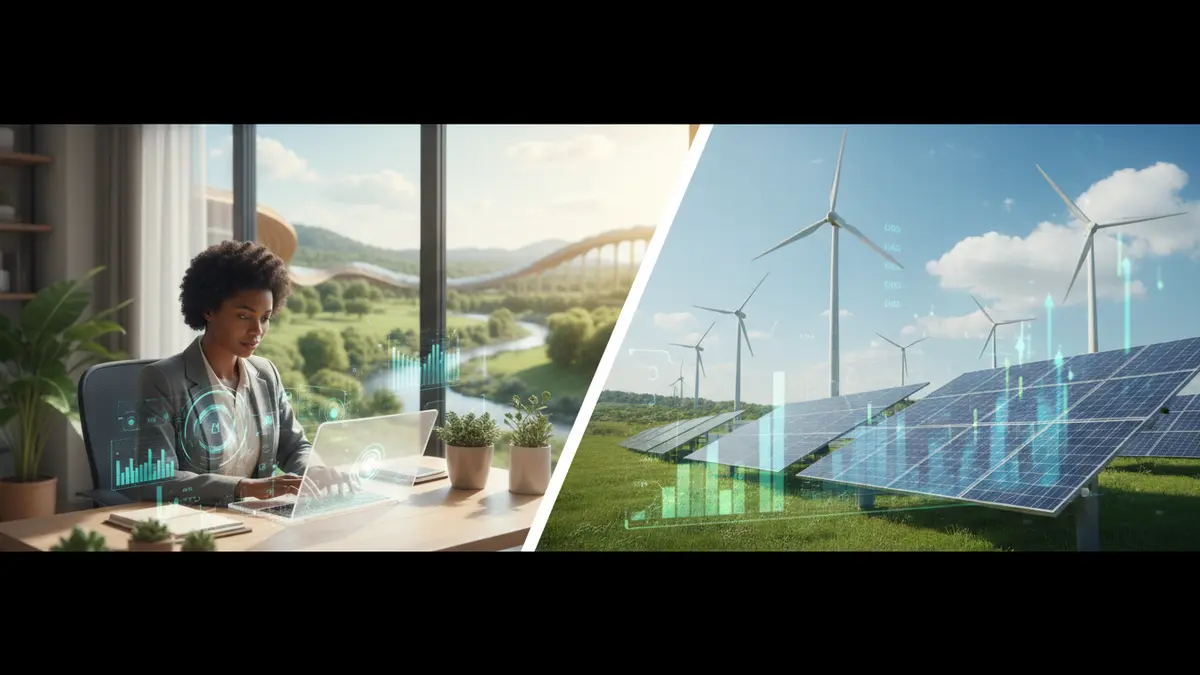
The green revolution is no longer just happening in vast, sun-drenched fields or windswept coastlines; it’s happening on laptops in home offices around the world. As we push deeper into 2026, the global urgency to combat climate change has fused with the post-pandemic normalization of remote work, creating a perfect storm of opportunity.
The renewable energy sector is experiencing an unprecedented boom, backed by trillions in investment and ambitious government policies. This isn’t just about building more solar panels and wind turbines; it’s about building the sophisticated digital infrastructure to manage them.
Related Stories




For skilled professionals, this translates into a gold rush for high-paying, location-independent careers that offer not just a great salary, but a chance to contribute to a sustainable future.
The Green Boom Goes Digital: Why Renewables are a Remote Work Goldmine
The very nature of the renewable energy industry in 2026 makes it uniquely suited for remote work. Unlike traditional, centralized power plants, renewable energy projects are distributed, often located in remote areas far from urban centers. Managing these assets—from a solar farm in the Australian outback to an offshore wind project in the North Sea—requires a workforce that can operate and collaborate digitally. This geographical dispersion of assets necessitates a decentralized workforce.
Several key factors are driving this remote work surge: (see also: Ultimate Guide: How to Transition to Online Jobs Successfully)
- Massive Capital Investment: Governments and private sectors in Tier A countries (USA, UK, Canada, Australia) are pouring billions into green infrastructure. This funding fuels the creation of new roles, many of which are knowledge-based and not tied to a physical site.
- Technological Advancement: The industry relies heavily on IoT sensors, AI-powered predictive analytics, cloud computing, and sophisticated software for grid management, energy forecasting, and asset optimization. These technologies are inherently digital, allowing analysts, developers, and managers to work from anywhere with an internet connection.
- Global Talent Shortage: The demand for specialized skills in areas like grid-scale battery storage, green hydrogen, and data science is outpacing the supply of local talent. Companies are forced to look globally, offering remote contracts to attract the best and brightest minds, regardless of their zip code.
This convergence means that you no longer need to relocate to a specific energy hub to build a rewarding career in the sector. The most critical work is increasingly being done through secure networks and collaborative platforms, opening the door to global opportunities.
High-Demand Remote Roles in Renewable Energy for 2026
As the industry matures, the roles become more specialized and sophisticated. While on-site technicians will always be essential, the high-paying strategic, analytical, and managerial positions are increasingly remote-first. Here are some of the most sought-after roles you can target in 2026.
Project Management & Operations
- Remote Project Manager: Oversees the lifecycle of renewable energy projects, from planning and financing to construction and commissioning. They coordinate with global teams of engineers, contractors, and stakeholders entirely online.
- Grid Operations Analyst: Monitors and analyzes the performance of the electrical grid, focusing on integrating variable renewable sources like solar and wind. This role is data-intensive and crucial for maintaining grid stability.
- Remote Asset Manager: Responsible for the financial and operational performance of a portfolio of renewable energy assets (e.g., a group of solar farms). They use software to track performance, schedule maintenance, and maximize revenue.
Data, Analytics & Finance
- Energy Data Scientist: Uses machine learning and statistical models to forecast energy production, predict equipment failures (predictive maintenance), and analyze energy market trends. This is one of the highest-demand roles in the sector.
- GIS (Geographic Information System) Analyst: Utilizes mapping technology and spatial data to identify optimal locations for new wind, solar, or hydro projects, considering factors like solar irradiance, wind speeds, land use, and grid proximity.
- Energy Markets Analyst: Analyzes electricity market data to develop trading strategies and advise on energy purchasing agreements (PPAs). This role is critical for the profitability of renewable energy projects.
Engineering, Policy & Design
- Renewable Energy System Designer: Uses specialized software like PVSyst, Helioscope, or AutoCAD to design utility-scale or commercial solar and wind systems remotely.
- Policy & Regulatory Affairs Specialist: Works with government agencies, utilities, and legal teams to navigate the complex web of regulations and incentives governing renewable energy. This role requires strong communication and analytical skills.
Essential Skills for Your High-Paying Green Career
Landing a six-figure remote job in renewables requires a blend of technical expertise and powerful soft skills. The most successful candidates in 2026 will be those who can bridge the gap between engineering, data, and business strategy.
Technical & Hard Skills:
- Specialized Software Proficiency: Expertise in industry-standard software like HOMER Pro for microgrid design, PVSyst for solar modeling, and GIS platforms like ArcGIS is highly valued.
- Data Analysis & Programming: Strong skills in Python or R for data analysis, along with experience in SQL and data visualization tools like Tableau or Power BI, are essential for analytical roles.
- Financial Modeling: The ability to build complex financial models to assess project viability, risk, and return on investment is crucial for asset management and development roles.
- Understanding of Energy Markets & Policy: A deep knowledge of how electricity markets operate and the regulatory landscape in your target regions (USA, UK, CA, AU) is a significant advantage.
In-Demand Soft Skills:
- Cross-Functional Communication: You’ll be working with engineers, data scientists, finance experts, and policymakers from different cultures. The ability to communicate complex ideas clearly is paramount.
- Project Management: Even if you’re not a dedicated project manager, understanding methodologies like Agile or holding a PMP certification demonstrates you can deliver results on time and on budget.
- Adaptability: The renewable energy sector is constantly evolving with new technologies and policies. A mindset of continuous learning is non-negotiable. For those looking to formalize their management skills, exploring PMP & Six Sigma certifications can provide a proven salary boost.
Targeting Top-Tier Countries: USA, UK, Canada & Australia
While the opportunities are global, Tier A countries lead the charge in hiring high-paid remote talent. Each has its unique focus:
- United States: Driven by the Inflation Reduction Act (IRA), the US is a hotspot for utility-scale solar, onshore wind, and energy storage projects. Green tech startups in hubs like California and Texas are also hiring aggressively.
- United Kingdom:0 A world leader in offshore wind, the UK offers numerous roles in project management, marine engineering logistics, and grid modernization.
- Canada: With a strong base in hydropower, Canada is rapidly expanding its wind and solar capacity. There’s a particular focus on sustainable resource integration and clean energy for remote communities.
- Australia: Boasting some of the world’s best solar resources, Australia is a leader in rooftop solar, utility-scale solar farms, and battery storage solutions. The burgeoning green hydrogen industry is also creating new, highly specialized remote roles.
Companies in these nations are accustomed to hiring internationally for specialized roles, making them prime targets for your job search. The key is to present yourself as a global professional. This starts with a perfectly tailored digital presence, which you can learn more about in our guide to optimizing LinkedIn for remote jobs in 2026.
Positioning Yourself to Win in the Global Talent Pool
In a competitive global market, a generic application won’t cut it. You need a strategic approach to stand out to international recruiters and hiring managers. (see also: Ultimate Platform Power: Maximize Earnings on Freelance Sites)
First, refine your resume and LinkedIn profile to be a beacon for renewable energy recruiters. Go beyond listing job duties; showcase quantifiable achievements. Instead of “Managed solar projects,” write “Managed a $15M portfolio of utility-scale solar projects, delivering them 10% under budget and 2 months ahead of schedule.” Sprinkle your profile with high-value keywords like “grid modernization,” “energy storage,” “PPA negotiation,” “predictive maintenance,” and “solar asset management.”
Second, prepare to excel in a remote interview process. The ability to build rapport and clearly articulate complex ideas over video is a critical skill in itself. Be prepared to discuss not just your experience, but also your passion for the industry and your understanding of global energy trends. For an in-depth strategy, mastering virtual interviews is essential to land top remote roles.
Finally, understand the landscape. Follow major renewable energy publications, connect with industry leaders on LinkedIn, and join relevant professional groups. Demonstrating that you are engaged and knowledgeable about the sector’s future will set you apart from less-invested candidates. (see also: Unlock Your Digital Goldmine: Best Online Digital Marketing Jobs for 2026)
Frequently Asked Questions (FAQ)
- Do I need an engineering degree to get a high-paying remote job in renewable energy?
- Absolutely not. While engineering roles are plentiful, the industry is desperate for professionals in data science, finance, software development, policy, and project management. A background in economics, computer science, or business with a demonstrated interest and some specialized knowledge in energy can be just as valuable as a traditional engineering degree.
- What are the typical salary ranges for these remote roles?
- Salaries vary significantly based on experience, specialization, and the company’s location. However, for senior-level remote positions based in Tier A countries, it’s common to see salaries well into the six-figure range. For example, a Senior Energy Data Scientist or an experienced Project Manager for a large-scale project can command salaries from $120,000 to $180,000 USD or more.
- How do I handle taxes if I’m working remotely for a company in another country?
- This is a critical and complex question. Tax obligations depend on your country of residence, the company’s location, and any existing tax treaties between them. You could be liable for taxes in both countries. It is strongly recommended that you consult with a tax professional who specializes in international employment. To get a foundational understanding, review our guide on Work from Anywhere tax laws to avoid surprises.
Conclusion: Power Your Career with a Sustainable Future
The intersection of the global energy transition and the remote work revolution represents one of the most exciting and lucrative career paths of 2026. These are not just jobs; they are opportunities to be at the forefront of solving one of humanity’s greatest challenges while enjoying the flexibility and financial rewards of a high-demand, location-independent career.
The demand for talent is high, the salaries are competitive, and the mission is critical. By strategically developing the right skills, optimizing your professional brand, and targeting the right markets, you can build a future-proof career that is both personally and professionally rewarding. The green digital revolution is here—it’s time to plug in.
Further Reading & Sources
- Federal Reserve
- Consumer Financial Protection Bureau (CFPB)
- Investopedia
- Federal Reserve — authoritative reference
- IRS — authoritative reference
- Consumer Financial Protection Bureau — authoritative reference
- Federal Trade Commission — authoritative reference
- Investopedia — authoritative reference
Sources
- Renewable energy – Wikipedia — Comprehensive overview of renewable energy sources, technologies, and global adoption.
- Energy News | Reuters — Latest news and analysis on the global energy sector and transition.
- Bloomberg Green — News, data, and analysis on climate change and sustainable business.
- Careers – Forbes — Insights into career development, job market trends, and the future of work.
- Environment | The Guardian — Reporting on environmental issues, climate crisis, and the green economy.
- BBC Worklife — Global perspectives on work, careers, and the evolving workplace.