
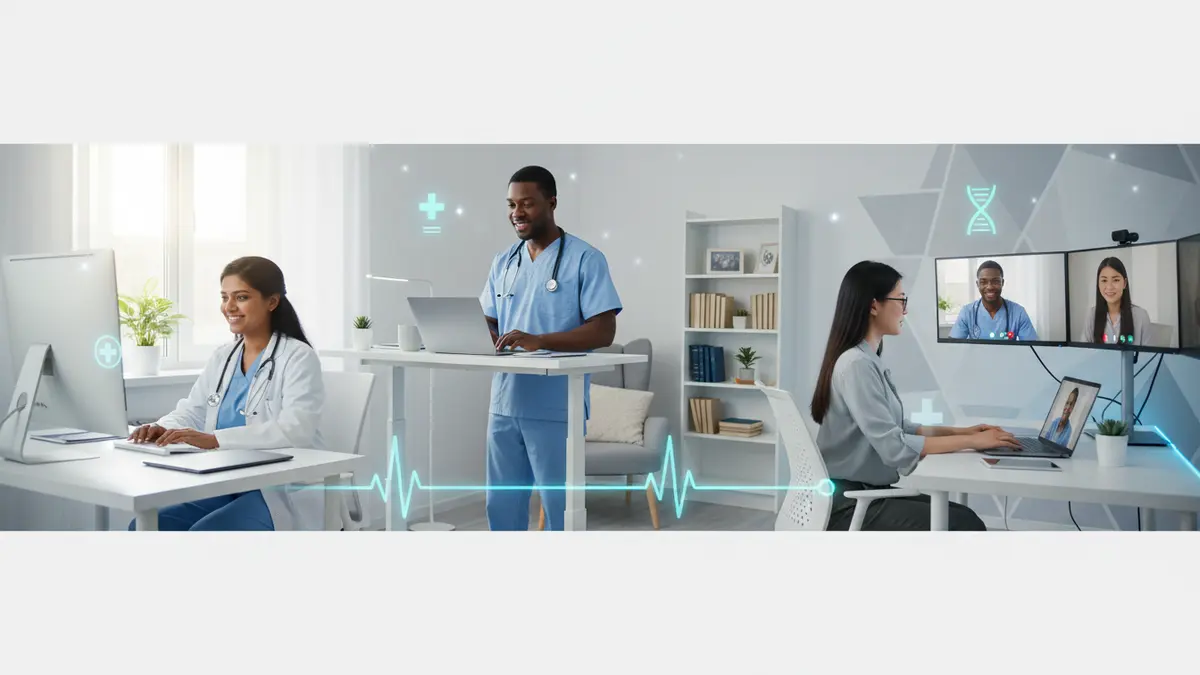
The traditional image of healthcare—sterile hallways and bustling waiting rooms—is undergoing a radical transformation. As we move through 2026, the sector’s digital revolution is accelerating, creating an unprecedented wave of high-paying, location-independent opportunities.
Driven by advancements in telehealth, the universal adoption of Electronic Health Records (EHR), and a global demand for more accessible care, the remote healthcare job market is no longer a niche—it’s a thriving ecosystem. For qualified professionals in the USA, UK, Canada, and Australia, this shift represents a golden opportunity to achieve unparalleled work-life balance without sacrificing career growth or financial reward.
Related Stories




The Digital Health Revolution: Why Remote is the New Reality
The pivot to remote work in healthcare isn’t a temporary trend; it’s a fundamental restructuring of how care is delivered and managed. Several key factors are fueling this growth.
Firstly, patient adoption of telehealth has skyrocketed. People now expect the convenience of virtual consultations for everything from routine check-ups to mental health counseling. Secondly, the digitization of patient data through EHR systems means that critical information is securely accessible from anywhere, decoupling tasks like analysis, coding, and case management from a physical location.
Finally, healthcare providers themselves are recognizing the benefits: reduced overhead costs, access to a wider talent pool, and improved practitioner satisfaction. This digital infrastructure has paved the way for a diverse range of roles to move entirely online.
Top High-Paying Remote Clinical Roles in 2026
For licensed clinicians, the ability to practice from home is a game-changer. These roles combine patient care with cutting-edge technology and command impressive salaries. Keep in mind that proper, jurisdiction-specific licensure is non-negotiable for these positions.
1. Telemedicine Physician / Specialist
Virtual consultations are the bedrock of modern telehealth. General practitioners and specialists in fields like psychiatry, dermatology, radiology, and cardiology are in high demand. Physicians can conduct patient visits, diagnose conditions, prescribe medication, and manage treatment plans via secure video platforms. This flexibility allows them to work for multiple platforms or health systems across different time zones (provided they are licensed appropriately).
2. Telehealth Nurse Practitioner (NP) / Registered Nurse (RN)
Nurses are the backbone of remote care delivery. Remote NPs often act as primary care providers in a virtual setting, managing chronic diseases and providing patient education. Remote RNs excel in roles like telephone triage, where they assess patient symptoms and direct them to the appropriate level of care, or as case managers, coordinating complex care plans for patients with long-term illnesses. These roles are critical for ensuring continuity of care outside of hospital walls.
3. Virtual Mental Health Therapist / Counselor
The demand for accessible mental health services has never been higher. Licensed therapists, counselors, psychologists, and social workers are finding abundant opportunities on dedicated telehealth platforms. Remote work removes geographical barriers, allowing patients in underserved areas to connect with qualified professionals and providing therapists with a more flexible and controlled work environment.
Booming Non-Clinical Remote Healthcare Opportunities
You don’t need to be a licensed clinician to build a successful career in remote healthcare. The administrative and technical machinery that supports modern medicine is vast and increasingly virtual. These roles are a key part of many high-income remote careers across various sectors. (see also: Finding Proven Remote Jobs 2026: Tier A High-Growth Sectors)
1. Health Informatics Analyst
With the explosion of digital health data comes the need for professionals who can interpret it. Health informatics analysts manage, analyze, and protect sensitive patient information. They work with EHR data to improve patient outcomes, streamline clinical workflows, and identify public health trends. A strong background in data analysis, IT, and healthcare systems is essential.
2. Medical Coder and Biller
This is one of the original work-from-home healthcare jobs, and its importance has only grown. Certified medical coders translate physician’s notes into standardized codes used for billing and insurance claims. Accuracy is paramount, and specialized coders (e.g., for oncology or surgery) are particularly sought after. While AI is assisting in this field, the need for expert human oversight remains critical.
3. Healthcare IT Project Manager
Hospitals and health systems are constantly implementing new technologies, from updating their EHR systems to launching new telehealth platforms. Remote IT project managers are responsible for overseeing these projects from start to finish, ensuring they are completed on time, within budget, and with minimal disruption to clinical services. A PMP certification combined with healthcare experience is a powerful combination here.
Essential Skills for Landing a Top Remote Role
Sério, securing a high-paying remote healthcare job requires more than just the right credentials. The virtual environment demands a specific skill set. First, technological proficiency is a must. You need to be comfortable with EHR software (like Epic or Cerner), telehealth video platforms, and secure communication tools.
Second, your soft skills are under a microscope. Developing an excellent “webside manner” is crucial for clinical roles, and you must be a proactive, clear communicator. Because of this, it’s vital to master virtual interviews to demonstrate these abilities. Finally, self-discipline and strong organizational skills are non-negotiable when your home is your office.
Navigating the International Job Market: USA, UK, CA, & AU
While the opportunities are global, the requirements are local. Each country has its own regulatory landscape.
- USA: The largest market, but licensure is handled at the state level. Clinicians often need to be licensed in the state where the patient is located, making multi-state licenses through compacts (like the Nurse Licensure Compact) highly valuable.
- UK: Opportunities exist both within the National Health Service (NHS) and the burgeoning private telehealth sector. Registration with the appropriate body (e.g., GMC for doctors, NMC for nurses) is mandatory.
- Canada & Australia: These countries’ vast geographies make telehealth a vital service for rural and remote populations. Licensure is managed at the provincial or state/territory level, and understanding these specific requirements is key to a successful job search.
Sources
- Telehealth — Official information and resources on telehealth services and benefits.
- Digital Health — Information from the National Institutes of Health on digital health technologies.
- Forbes — Business insights and analysis on the future of work and healthcare.
- BBC News – Health — News and updates on healthcare technology and policy, including UK perspective.
- Electronic health record – Wikipedia — Detailed information on EHR systems, their adoption, and impact on healthcare.
Frequently Asked Questions About Remote Healthcare Jobs
What types of remote healthcare jobs are available in 2026?
The remote healthcare sector offers a diverse range of opportunities, including both clinical and non-clinical roles. Clinical positions include Telemedicine Physicians/Specialists (e.g., psychiatry, dermatology, radiology), Telehealth Nurse Practitioners (NPs) and Registered Nurses (RNs) for virtual care and case management, and Virtual Mental Health Therapists/Counselors. Non-clinical roles encompass Health Informatics Analysts, Medical Coders and Billers, and Healthcare IT Project Managers.
Is specific licensure required for remote clinical healthcare roles?
Yes, for all remote clinical roles, proper, jurisdiction-specific licensure is non-negotiable. Professionals must be licensed in the relevant state, province, or country where they are practicing and where the patient is located.
What essential skills are necessary to succeed in a remote healthcare job?
Securing a top remote healthcare job requires more than just credentials. Essential skills include strong technological proficiency (comfort with EHR software like Epic or Cerner, telehealth platforms, and secure communication tools), excellent soft skills such as a “webside manner” and clear communication, self-discipline, and strong organizational abilities.
How do licensing requirements for remote healthcare jobs vary across the USA, UK, Canada, and Australia?
Licensing requirements differ significantly by country. In the USA, licensure is state-level, often requiring clinicians to be licensed in the patient’s state, with multi-state compacts being valuable. In the UK, registration with appropriate bodies like the GMC for doctors or NMC for nurses is mandatory. For Canada and Australia, licensure is managed at the provincial or state/territory level, respectively, making understanding these specific regional requirements crucial.