

Find Loans That Match Your Profile
Compare vetted lenders side-by-side. Review APR, terms, and eligibility before deciding.
Compare LendersThat gut-wrenching moment when a financial emergency strikes is stressful enough. A sudden car repair, an unexpected medical bill, or an urgent home repair can throw any budget into chaos. When you’re also dealing with a low credit score, the pressure can feel immense, making you a prime target for predatory lenders.
These lenders promise fast cash with no questions asked, but they hide a dangerous debt trap that can make a bad situation infinitely worse. This guide will empower you to identify these predatory practices and navigate toward safe, responsible emergency credit options, even with a less-than-perfect credit history.
Related Stories




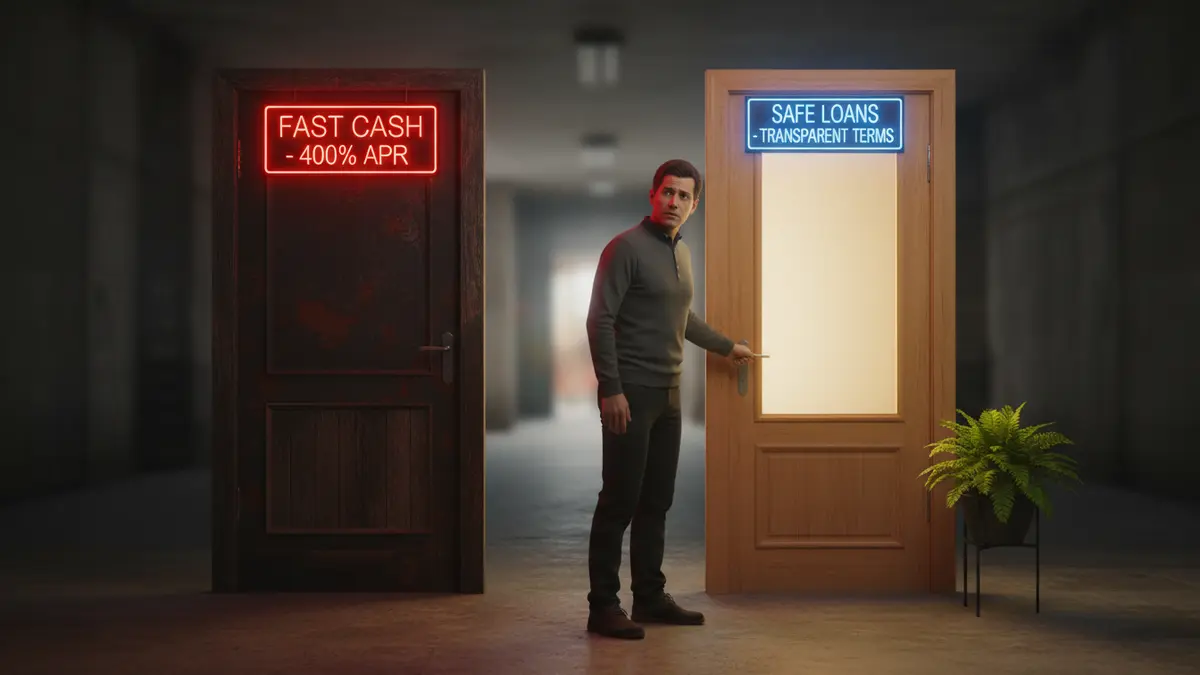
What Exactly Is a Predatory Loan?
A predatory loan is designed to benefit the lender at the borrower’s expense, often by using deceptive, unfair, or abusive terms. The most common and dangerous example is the payday loan. Marketed as a short-term fix, a payday loan is a small, high-interest loan that is typically due on your next payday.
The danger lies in its structure. They are built to be difficult to repay, trapping borrowers in a cycle of debt.
Key Red Flags of Predatory Loans:
- Exorbitant Annual Percentage Rates (APRs): While a personal loan might have an APR between 6% and 36%, payday loans can have APRs of 400% or even higher. This means you could pay back several times what you originally borrowed.
- Extremely Short Repayment Terms: Demanding full repayment in two to four weeks is unrealistic for most people facing an emergency. This often forces borrowers to “roll over” the loan, paying a new fee to extend the due date and deepening the debt.
- No Credit Check: While this seems appealing, it’s a major warning sign. Reputable lenders need to assess your ability to repay to ensure the loan is responsible. Skipping this step often means the lender plans to profit from your potential failure to pay on time.
- Hidden Fees and Vague Terms: Predatory lenders often bury excessive fees in confusing contracts. If a lender can’t give you a clear, simple breakdown of the total cost, walk away.
The Anatomy of a Safe Emergency Loan
In stark contrast to predatory options, safe emergency loans are built on transparency and affordability. They are designed to be a helpful financial tool, not a trap. When you’re searching for emergency credit, these are the features you should demand.
Look for lenders who offer Transparent Terms: Low Credit Loans with Fair Repayment Plans to ensure you understand exactly what you’re agreeing to.
Hallmarks of a Legitimate Lender:
- Clear and Reasonable APR: A safe lender will always be upfront about the APR. For borrowers with low credit, rates will be higher than for those with excellent credit, but they should be nowhere near the triple-digit rates of payday loans. Many consumer advocates consider 36% to be the upper limit of an affordable rate.
- Manageable Repayment Schedule: Instead of a two-week deadline, a safe loan will have a clear term of several months or even years, with fixed monthly payments that fit into your budget.
- Credit Reporting: Legitimate lenders report your on-time payments to the major credit bureaus (Equifax, Experian, TransUnion). This is a huge benefit, as it allows you to rebuild your credit score over the life of the loan.
- Licensing and Regulation: Safe lenders are licensed to operate in your state or country and adhere to federal and local lending laws designed to protect consumers.
Safer Alternatives for Emergency Funding with Low Credit
Having a low credit score doesn’t mean you’re out of options. Several reputable sources provide emergency credit without resorting to predatory tactics. Your best strategy is to explore these alternatives first.
Credit Unions
Credit unions are non-profit financial institutions owned by their members. Because they aren’t focused on maximizing profits, they often offer lower interest rates and more flexible terms than traditional banks, especially for members with low credit scores.
Many offer small personal loans, sometimes called Payday Alternative Loans (PALs), which are specifically designed to be an affordable alternative to predatory loans. To learn more, explore Credit Union Relief: Emergency Loans for Low Scores (USA/UK/CA).
Online Personal Loan Lenders
The fintech revolution has produced a new generation of online lenders who specialize in working with borrowers across the credit spectrum. Many of these Proven Online Lenders: Bad Credit Personal Loans (No Payday!) use advanced algorithms that look beyond just your credit score, considering factors like your income, employment history, and cash flow.
They often allow you to pre-qualify with a soft credit check, which won’t affect your score, so you can see your potential rate and terms before you commit.
Secured Loans
If you have an asset, like a car or savings, you may be able to use it as collateral to secure a loan. Because the lender has less risk, you can often get a lower interest rate even with bad credit.
However, this option carries a significant risk: if you fail to repay the loan, the lender can seize your asset. This should be considered carefully and only if you are confident in your ability to make the payments.
The Vicious Cycle: Long-Term Consequences of Predatory Loans
While the immediate relief offered by a predatory loan might seem like a lifesaver, it’s often a mirage that quickly leads to a much deeper financial crisis. The true danger of these loans lies not just in their initial high costs, but in their insidious design to trap borrowers in a perpetual cycle of debt.
Understanding these long-term ramifications is crucial for anyone seeking “Predatory Loans Safe” alternatives.
The Debt Trap Explained
Predatory loans, particularly payday loans, are structured to be difficult to repay on their original terms. For instance, a borrower might take out a $400 loan with a 400% APR, due in two weeks. If they can’t pay the full $480 (principal plus interest/fees) by the due date, the lender will offer a “rollover” or “renewal.”
This means paying another fee (e.g., $80) to extend the loan for another two weeks, without reducing the principal. This process can repeat indefinitely. A study by the Consumer Financial Protection Bureau (CFPB) found that over 80% of payday loans are rolled over or re-borrowed within 30 days, and nearly 20% of all payday loan sequences end in default.
This means a borrower could pay hundreds, even thousands, in fees without ever touching the original principal, effectively paying several times the amount initially borrowed.
Credit Score Devastation and Financial Strain
While many predatory lenders advertise “no credit check,” this doesn’t mean your credit is safe. If you default on a predatory loan, the lender can sell the debt to collections agencies. These agencies *will* report the delinquency to credit bureaus, severely damaging your credit score.
A tarnished credit history makes it even harder to qualify for safe, affordable loans in the future, pushing you further towards high-cost options. Beyond credit, the constant struggle to repay these loans can lead to an inability to cover other essential expenses, increasing the risk of utility shut-offs, eviction, or even bankruptcy.
The stress and anxiety associated with this financial instability can also take a significant toll on mental and emotional well-being, creating a ripple effect across all aspects of life. (see also: Ultimate Guide: Bad Credit? Instant Loan Approval 2026)
Building a Financial Safety Net: Proactive Steps Against Future Emergencies
The best defense against predatory loans is a strong financial offense. While emergency loans are sometimes unavoidable, taking proactive steps to build a financial safety net can significantly reduce your vulnerability and help you avoid the need for high-cost credit in the first place.
These strategies empower you to choose “Predatory Loans Safe” options, or even bypass the need for a loan entirely.
Cultivating an Emergency Fund
An emergency fund is a stash of readily accessible cash specifically for unexpected expenses. Even a small fund can make a huge difference. Aim to save at least three to six months’ worth of essential living expenses, but don’t be intimidated by that number.
Start small: automate transfers of just $10 or $20 from each paycheck into a separate savings account. The key is consistency. Having even $500 to $1,000 saved can prevent you from needing a loan for minor emergencies like a flat tire or a small medical co-pay, insulating you from the clutches of predatory lenders.
Mastering Your Budget and Spending Habits
Understanding where your money goes is the first step toward controlling it. Create a realistic budget that tracks your income and all your expenses. Identify areas where you can cut back, even slightly.
This might mean packing lunch instead of buying it, canceling unused subscriptions, or reducing discretionary spending. Every dollar saved by conscious budgeting is a dollar that can go towards your emergency fund or reduce your reliance on borrowed money.
A well-managed budget gives you financial clarity and the power to make informed decisions, making you less susceptible to the allure of quick cash from predatory sources.
Strategic Credit Score Improvement
A higher credit score is your passport to better financial products, including more affordable emergency loans. Even with a low score, you can start rebuilding. Consider a secured credit card, where your credit limit is backed by a cash deposit, allowing you to establish a positive payment history.
Credit builder loans, offered by some credit unions and community banks, are another excellent tool: you make payments into a savings account, and once the loan term is complete, you receive the funds, having built credit along the way.
Becoming an authorized user on a trusted family member’s credit card can also help, provided they have good payment habits. Improving your credit score over time opens doors to mainstream lenders who offer fair APRs and manageable terms, ensuring any future emergency credit you seek is truly “Predatory Loans Safe.”
Na real, how to Apply Smartly and Protect Yourself
When you’re under pressure, it’s easy to overlook details. Before signing any loan agreement, take a deep breath and run through this safety checklist:
- Investigate the Lender: Look up reviews on the Better Business Bureau (BBB) and Trustpilot. Check the Consumer Financial Protection Bureau (CFPB) complaint database for any red flags.
- Never Pay an Upfront Fee: A legitimate lender will never ask you to pay a fee before your loan is approved and disbursed. Demands for an “origination fee” or “insurance fee” upfront are the hallmark of a scam.
- Read Every Word: Scrutinize the loan agreement. If you don’t understand something, ask for clarification. Be sure you can identify the exact APR, the total repayment amount (loan + all interest and fees), and the payment schedule.
- Trust Your Instincts: If a lender is pressuring you to sign immediately or making promises that sound too good to be true, it’s a sign to walk away.
Further Reading
For deeper context and authoritative perspectives, consult these sources:
Frequently Asked Questions (FAQ)
1. Can I get a real emergency loan with ‘no credit check’?
While some lenders advertise “no credit check loans,” this is almost always a sign of a predatory payday or title lender. Reputable lenders who work with bad credit will perform at least a ‘soft’ credit check during pre-qualification to see your history, but they also consider other factors like your income.
A lender who doesn’t care about your ability to repay is not a safe choice.
2. What is the highest APR I should consider for a bad credit loan?
Financial experts and consumer protection agencies generally agree that an APR of 36% is the upper limit for a loan to be considered affordable. While your rate may be close to this with a low score, you should immediately reject any offer with a triple-digit APR (100% or more), as it is predatory and designed to trap you in debt.
3. How quickly can I get a safe emergency loan?
The need for speed is understandable in an emergency. Many reputable online lenders and fintech platforms have streamlined their application processes. It’s often possible to get approved and have funds deposited into your bank account within one to two business days, and some can even provide same-day funding.
Conclusion: Choose Safety Over Speed
Facing a financial emergency with a low credit score is a vulnerable position, but it doesn’t have to end in a cycle of predatory debt. By understanding the red flags of predatory lenders and knowing the hallmarks of safe, responsible loans, you can make an empowered choice.
Options like credit unions and reputable online personal loan providers offer a lifeline without the life-altering consequences of a payday loan. Take the time to research your options and read the fine print. Your financial future is worth the extra hour it takes to secure a loan that helps, not hurts.
Sources
- What you need to know about payday loans — CFPB guidance on understanding and avoiding payday loan debt.
- Payday Loans: What to Know Before You Borrow — FTC consumer alerts regarding the risks of payday loans.
- What Is Predatory Lending? — NerdWallet’s explanation of predatory lending and how to identify it.
- Predatory Lending: Definition, Types, and Examples — Investopedia’s detailed overview of predatory lending practices.
- Alternatives to payday loans — Bankrate’s guide to safer emergency credit options.
- Predatory lending — Wikipedia’s comprehensive article on the concept of predatory lending.